
Understanding the Voices Behind Malaysia’s Interfaith Harmony
In a nation often described as a “miniature Asia,” where diverse cultures, religions, and ethnic communities coexist, understanding its demographic composition goes beyond academic interest and serves as a fundamental basis for fostering national unity. Malaysia’s distinctive social fabric, woven from the threads of Malay, Chinese, Indian, and myriad indigenous communities, embodies both profound opportunities and complex challenges. Thus, to genuinely comprehend the dynamics of interfaith harmony, one must first discern who is speaking, their origins, and the influences that shape their worldviews.
Based on a USIM Transdisciplinary Research Grant, a recent survey of 134 respondents offers a microcosmic yet revealing glimpse into the demographic landscape underpinning Malaysia’s ongoing journey toward a harmonious, pluralistic society. Specifically, by analyzing the ethnicity, religion, and state of residence of these respondents, one can begin to appreciate the complex interplay of factors that ultimately define the Malaysian experience.
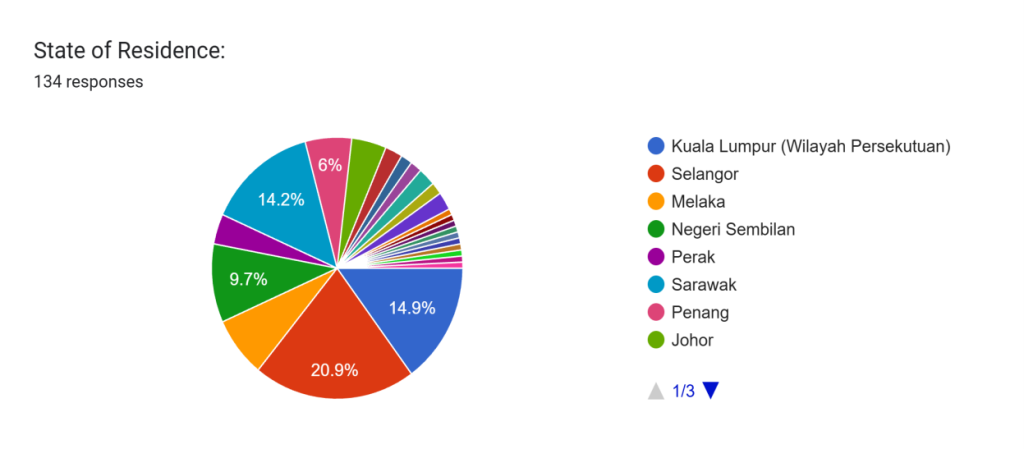
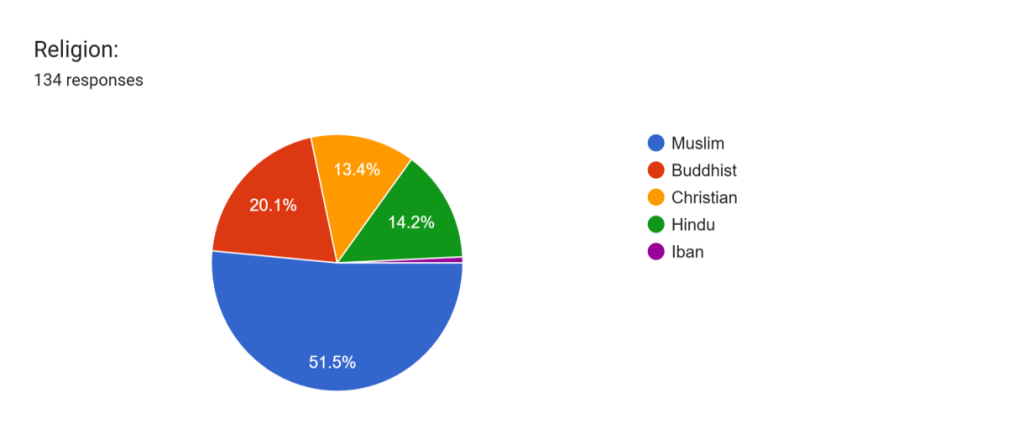
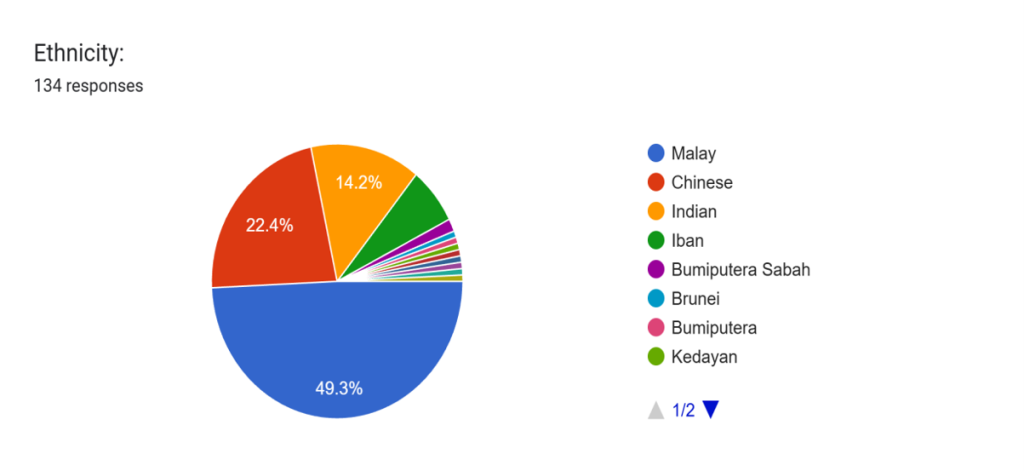 The data reveals a society where inter-religious interaction is not just tolerated, but embraced. An overwhelming majority of respondents indicated they have friends from other religious communities and feel comfortable having colleagues from different faiths. This isn’t just about passive acceptance; it’s about active participation. Many survey participants have visited the homes of friends from other religious backgrounds for social occasions like festivals and birthdays.
One respondent echoed this sentiment, sharing: “I have worked and studied with people from different religions, and we always respected each other’s beliefs, helped one another, and celebrated cultural festivals together. It strengthened our friendship and understanding.”
Another respondent highlighted the ease of everyday interactions: “We’re able to talk about anything and everything comfortably. Having them ask me reasons behind my religious practice or culture so they can understand further, and told that they were never able to ask anyone of those.”
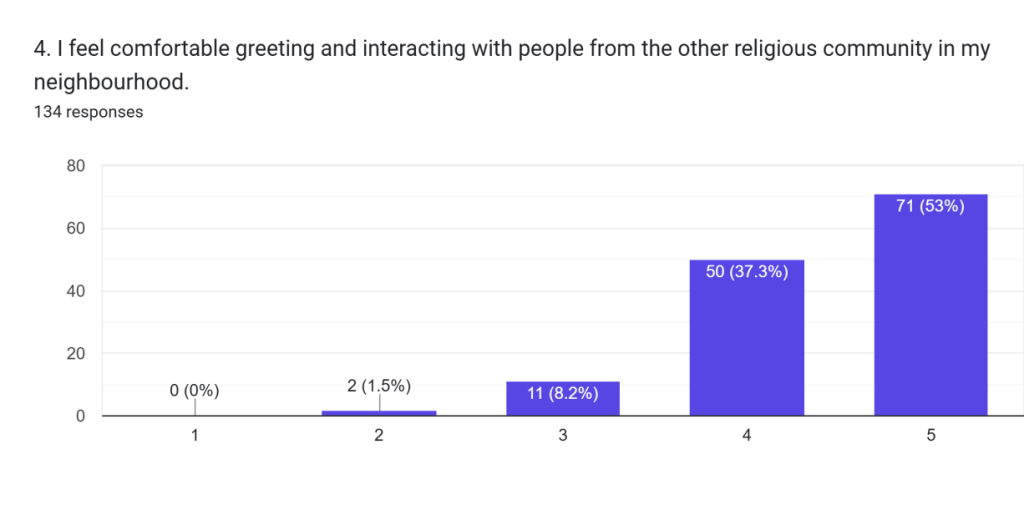
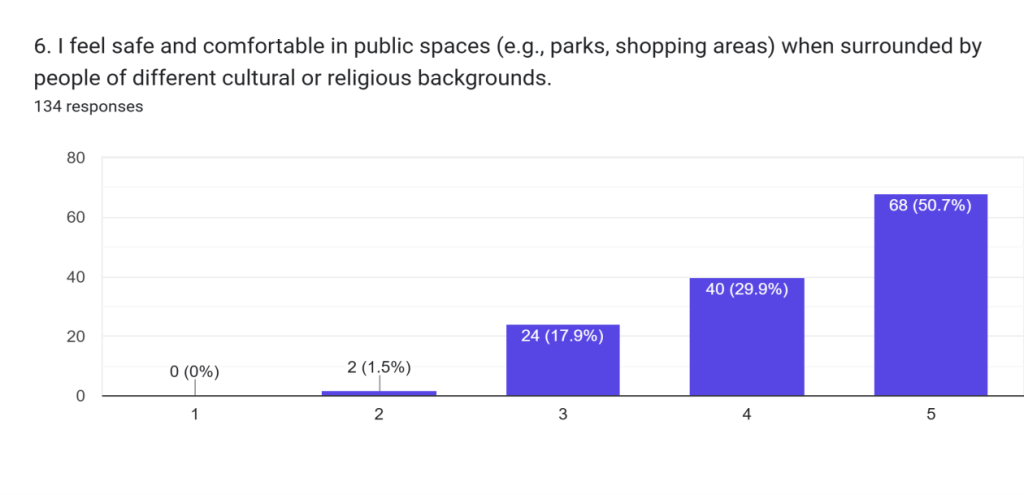 The survey also found that most respondents feel safe and comfortable in public spaces when surrounded by people of different cultural or religious backgrounds. Furthermore, a significant number believe that when disagreements related to religion or culture occur, they can be discussed constructively—a testament to the resilience of Malaysia’s social cohesion.
The study delves deeper, exploring not just interactions, but the quality of understanding and mutual respect. Most respondents believe they have a basic understanding of other religious practices and feel that their own beliefs are respected by other communities.
This mutual respect manifests in everyday moments of genuine consideration. As one respondent highlighted: “One positive experience I had was working with a colleague from different religious background. We didn’t focus on our differences, but instead communicated well and respected each other’s practices.”
Another pointed to the simple act of accommodation: “Respect Muslim needs to have halal food and compromise to find halal vendor or restaurant just to eat with, we are vegetarian, no issue.”
One of the most heartening findings of the survey is the extent to which Malaysians from different religious backgrounds participate in each other’s celebrations. From Hari Raya open houses to Chinese New Year gatherings, from Gawai festivals to Christmas celebrations, respondents consistently spoke of being invited into the homes and lives of their neighbours and colleagues.
“During Hari Raya, my Muslim neighbor always shares homemade rendang and festive treats with my family. It’s a wonderful gesture that has brought us closer as neighbors and allowed us to learn more about each other’s traditions,” shared one respondent.
Another recounted: “I got invited to their special celebration such as Raya, Chinese New Year and Pesta Kaul.”
The survey also revealed a beautiful anecdote about a Chinese man living near a mosque who found the Fajr adhan helpful for waking up early for work. This story, shared by a respondent, illustrates how religious practices can be appreciated across faith lines when communities live together with mutual respect.
Moreover, the COVID-19 pandemic, while a period of global hardship, appears to have strengthened inter-religious bonds in Malaysia. One respondent shared: “During COVID-19, I with my Malay friend were quarantined together and supported each other. That experience helped us build trust and friendship despite our different religious backgrounds.”
This view was shared by others, who noted that participation in community activities and school programs helped foster trust, strengthen friendships, and promote mutual respect. ‘Working together on community and school activities helped build trust, friendship, and mutual respect,’ one respondent noted simply but powerfully.
However, the path to a perfectly harmonious society is not without its bumps. The survey also asked respondents to identify the biggest challenges to achieving greater harmony. The answers were telling.
A recurring theme was the prevalence of misinformation and negative stereotypes, often amplified by social media. As one respondent put it: “Social media, misinformation, and stereotypes can also deepen misunderstandings by encouraging quick assumptions instead of meaningful conversations.”
Lack of meaningful interaction: “When people have difficulty communicating or grow up in different social environments, misunderstandings can happen more easily.”
Generational biases: “Cultural bias that is passed down from one generation to another” and “negative expectations about other races among young people” were raised as persistent hurdles.
Misunderstandings about religious practices: “The biggest challenge is understanding and respecting religious practices. While there may be no major issue with Muslims and non-Muslims greeting or interacting with each other, misunderstandings can arise when Islamic practices are more visible in the community.”
Despite these challenges, respondents offered constructive solutions. Many emphasized the importance of education, open communication, and learning from a young age.
“I also think respect should be taught from a young age by parents and families. They should teach children to respect people of different faiths, communicate politely, and accept religious differences. This will help build a more peaceful and harmonious community,” one respondent wrote.
Another added: “Greater harmony can be achieved when people communicate openly, show tolerance, and make an effort to learn about one another.”
The survey revealed overwhelming support for interfaith engagement, with most respondents expressing openness to activities that promote interfaith understanding and a strong belief that all communities should learn about each other’s religions and cultures. Several respondents highlighted the unique experience of Sarawak, where interfaith coexistence has long been a lived reality.
This perspective underscores the diversity of the Malaysian experience and the need for policies that recognize regional differences in interfaith relations.
When asked to identify the strongest factor promoting harmony between Muslims and non-Muslims, respondents offered a range of answers, the most common being mutual respect, tolerance, working together, festivals and shared celebrations, good manners and character, and strong patriotism.
One respondent succinctly captured the essence of the Malaysian approach: “Respect as a human fellow rather than from the origin we came from.”
The responses paint a nuanced portrait of a nation in progress. The openness to learning about other cultures is high, with many expressing a desire to engage in activities that promote interfaith understanding.
One respondent perhaps said it best: “In Malaysia, we were known as a people who always being humble, kind and friendly. All these are the most positive experience that I had with my neighbour and coworker. Apart from being understanding of other people religious background too.”
Another shared a touching reflection on the values that unite Malaysians: “One positive experience was learning about each other’s religious traditions and celebrations. It helped me appreciate our differences while realising that we share many common values, such as respect, kindness, and helping others.”
Similarly, many other responses expressed harmonious coexistence in Malaysia—from festive open houses to shared meals, from helping a stranded motorist to tasting food from another culture. The survey is filled with countless small acts of kindness that collectively form the backbone of Malaysian society.
Conclusion
This survey reminds us that while Malaysia’s journey toward perfect harmony is ongoing, its foundation is strong, built not just on policies, but on the everyday interactions of its people.
The study reveals a nation where interfaith friendships are common, where respect is the guiding principle of neighbourly relations, and where shared celebrations and shared challenges bring communities closer together. At the same time, it highlights the persistent challenges of misinformation, polarization, and generational biases that threaten to erode this fragile harmony.
As one respondent wisely noted: “The peaceful coexistence that Malaysians have long enjoyed is a product of mutual understanding and humanitarian values instilled across generations. It is not something to be taken for granted or surrendered to ignorance“
In a world increasingly divided along religious and cultural lines, Malaysia offers a model of what is possible when communities choose understanding over suspicion, respect over prejudice, and friendship over fear.
This piece is one of the outputs of the Transdisciplinary Research Grant of Universiti Sains Islam Malaysia (USIM), titled ‘The Features of Harmonious Coexistence between Muslims and Non-Muslims in Malaysia: A Case Study of Selected Malaysian States’ (Research Code: PPPI/TRANSDISIPLINARI/FKP/USIM/110624).
 |
Penulis :
Assoc. Prof. Dr. Mohamed Mihlar Abdul Muthaliff |
|---|---|
 |
Penulis :
Assoc. Prof. Dr. Mohd Rushdan Mohd Jailani |
 |
Assoc. Prof. Dr. Mohd Rosmizi Abd Rahman Akidah and Religion Studies Faculty of Leadership and Management,, Universiti Sains Islam Malaysia (USIM). |